


As parents, we are prepared to die for our children. But for our children, it is more important to ask: are you prepared to live your life to the full for them?

1. Slow life
It’s never too late to start.
Children need plenty of time to grow and develop. The human child is the most helpless of mammals at birth and is destined for close contact with its parents, especially for the first 3 years of its life.
In order to provide your child with the natural growing conditions he or she needs, you as a parent must learn to slow down.
The everyday life of a small child will not last forever, but your children only have one childhood and the importance of a good enough childhood for their later life is undeniable.
Your child is primarily and unconsciously using the learned patterns of behaviour in his/her own parenting that he/she has modelled in his/her childhood family. Make sure you have enough time to reflect and observe your own behaviours to ensure that you raise your child according to your core values. You don’t want, perform, rush or act driven by your lizard brain throughout your parenting.
Take control by slowing down. By cutting out anything that takes up unnecessary energy and time with your children.
Do things that the whole family enjoys. Parenthood is a wonderful time in life when you realise that not everything you do together has to be geared towards your little ones. Above all, your child loves to be together and to be amazed and excited by everything you do. It just slows down and takes more time when you have little feet and hands.
Take time with your child to wonder, explore and take very slow walks.

2. Teach your child to move around in nature
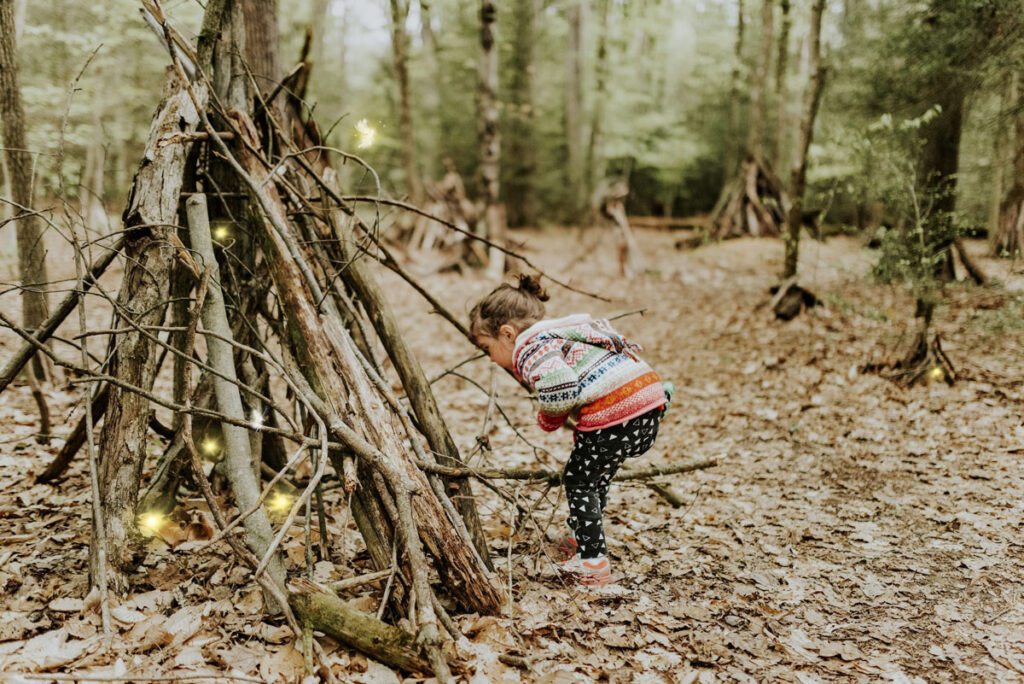
Being outdoors has numerous health benefits, both physical and mental. The colours and scents found in nature have a positive effect on mental health. Being in the forest develops all the senses in a variety of ways.
Playing in the forest develops creativity, ingenuity and imagination. It also indulges our senses in every way. In the forest, the body and mind are in their natural state, resting and resilient.
“Did you know that forest soil supports immunity and significantly prevents allergies, for example?”
Distances, differences in altitude and challenging terrain develop a child’s muscles, bones, balance and eyesight, for example.
Increased screen time has been shown to impair children’s night vision and distance vision, for example. Resting the eyes in nature.
The development of risk-taking skills also increases when playing in the forest.
Nature has many ways to heal us, so teach your child from an early age to respect nature as part of themselves.
3. Involve your child from an early age
No one wants to be useless and inactive. From an early age, a child wants to be part of the family. He or she wants to be a serious member of the family with an important role to play.
If a child is treated as helpless, incompetent or ignorant, he or she will start to feel unwell and this will often be directly reflected in the child’s behaviour.
Children deserve far more credit than we give them. They have an enormous amount of wisdom and valuable perspective to share if you just stop and listen.
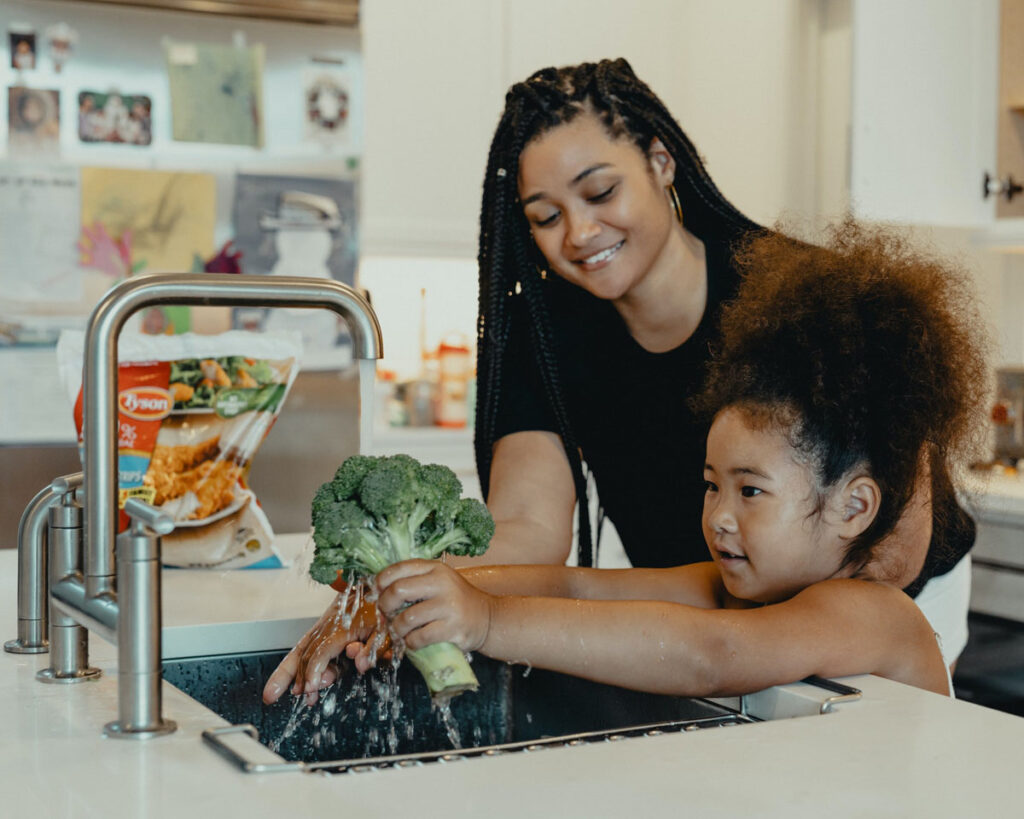
Give your child age- and skill-appropriate, genuinely useful everyday chores and learn to accept their incompleteness when doing them.
Give tasks where the child can genuinely succeed and be useful. Save your verbal instructions and checking what you are doing and let the child learn by doing and learning by example at his or her own pace.
As the child grows, the skill level increases and develops. By first doing it their way, your child will start to model your way (because you are their ultimate hero and idol). Little by little, your child will want to do more challenging chores out of his or her own desire to help for the common good.
4. Model the behaviours you want your child to learn
- If you want your child to listen to you, learn to listen to them. If you want your child to speak nicely, speak nicely to them. If you want the family to stop shouting, stop shouting. If you want your child to be considerate of other people, be considerate of other people. If you want the child to be more empathetic, treat the child empathetically.
- If you meet your child empathetically, you teach him to meet himself and others empathetically.
- If you set limits in your life on how you can be treated, you will teach him to respect and set his own limits.
- If you respect your own limits in life, your child will learn that their limits matter too.
- If you face yourself with grace and take responsibility for your mistakes, you will teach your child to be responsible and merciful to himself.
- If you show your child how mistakes are an opportunity instead of a failure, you will teach them to grow up without shame.
- If you show your child your feelings and tell them what’s behind them, you teach them to show and understand their feelings.
- If you talk to your child constructively, you teach your child to talk constructively.
- If you pursue your own dreams, you teach your child to do the same.
- If you persevere to work hard for your goals, you will teach your child to persevere to achieve theirs.
- If you connect with your child by showing interest in their day by asking questions and listening, you will teach them that their experiences and issues matter.
“Your example is the most important thing in raising children.”

5. Talk to yourself as you would wish your child to talk to you
What words do you use when you talk about yourself?Do you belittle your own abilities or punish your body with words or actions?
Also pay attention to how you let others talk about you and to you, and how others around the child talk about themselves and others. If your child lives in a daily life where people gossip and talk badly about others, he or she will learn to shame themselves and make connections through gossip.
“Pay attention to how you talk about yourself – How your child sees you treating yourself will play a huge role in their inner speech.”
Gossiping makes the child pay attention to his or her own appearance, and he or she begins to look for and cover up his or her own faults so that they are not talked about or he or she brings shame to his or her family. He will not do things for fear of failure and the shame it brings. He learns that failure is shame, when in fact failure is the best way to learn and grow. Instead of gossiping, learn to connect with other people by talking about anything else. Talk about others only if you have appreciation and admiration in your words. That way you will teach your child that you also talk about them with admiration and appreciation when they are not around.
How your child sees you treating yourself will be part of his or her inner speech. Learn to speak nicely to yourself too, learn to see your own worth, learn to accept yourself as an unfinished learner.
Only through your example will your child learn to be merciful and compassionate to themselves.
“If you don’t see beauty when you look in the mirror or have an appreciation for yourself, you have work to do, not only for yourself but also for your child.”

6. Live a life in line with your values
Don’t leave your happiness in the hands of others. Learn to know yourself better by stopping to listen to what values are important to you.
Once you know your values, start making informed choices based on them. Don’t go where everyone else goes just because it feels safe. Go where your values guide you to go.
Make choices in your everyday life that you can genuinely stand behind. By following your own values, you teach your child to do the same.
A child’s job is not to learn to take orders, but to learn to make choices based on their own values.
“By your own example, you’ll raise strong, brave and healthy children.”
Our job as parents is not to raise our children to face the future that we ourselves grew up to face.
Our job is to educate children towards their future. A future that we understand less about our own children. That’s why you should raise a child from the inside out.
“Give your child the gift of a strong sense of self through your example.”
If a child is well inside, he or she will be able to weather the storms of life and live a life of contentment and gratitude in any profession, income bracket or living environment.
Grow your child with an open mind towards his or her future.